
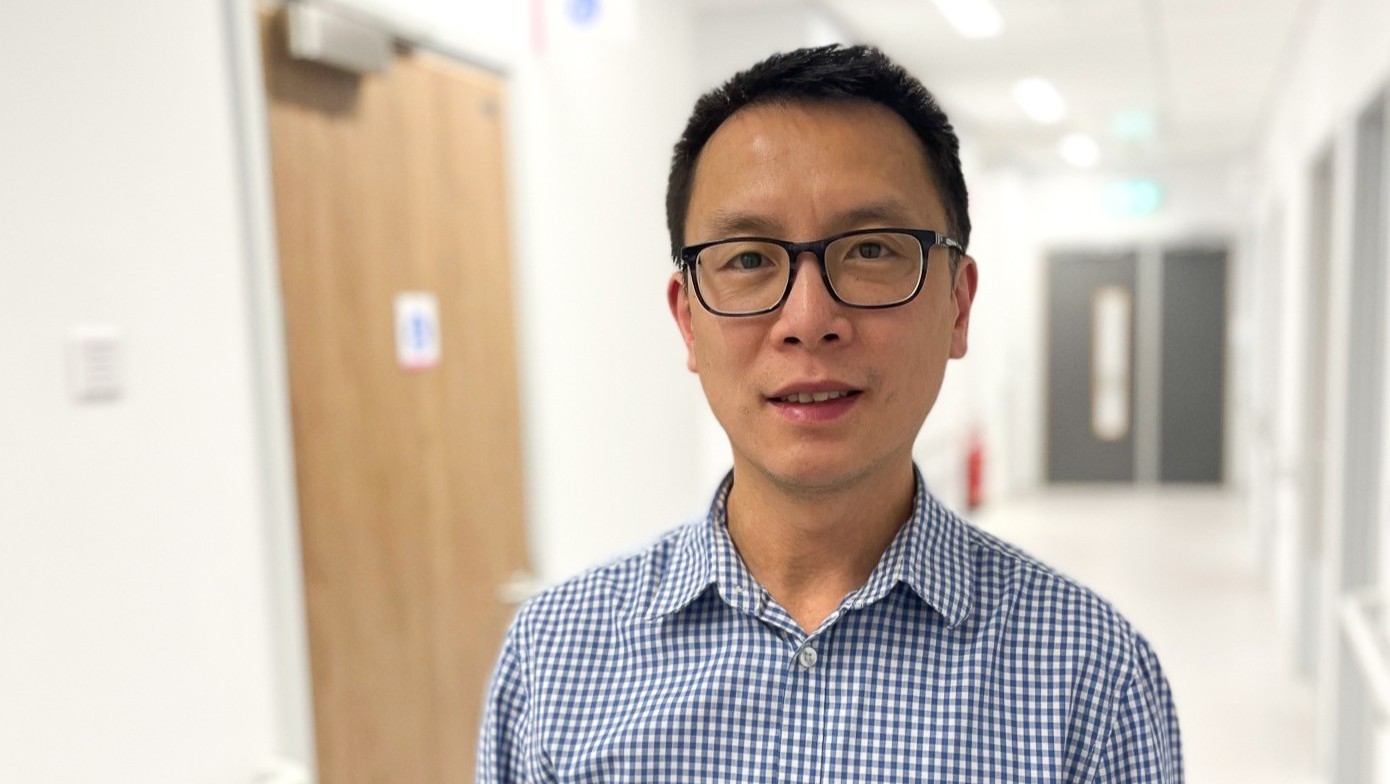
Patients in Liverpool who require treatment for urinary obstructions, such as kidney stones, are now benefitting from a new technique which is quicker and less invasive than traditional methods.
An innovative magnetic stent is now being used by surgeons at the Royal Liverpool University Hospital. A stent is a thin, flexible tube which is placed in the ureter, which carries urine from the kidney to the bladder.
Its unique magnetised tip allows clinicians to remove it quickly and non-invasively using an external magnetic retrieval tool. Crucially, this approach avoids the need for a cystoscope, a procedure that can be uncomfortable and often requires anaesthesia.
By removing that step, patients experience less discomfort, shorter procedure times and a smoother recovery.
One of the first patients to benefit from this new procedure is Angela Spencer, 63, from Liverpool City Centre. When she was told she needed treatment for kidney stones in summer 2025, she expected it to be a difficult journey, having previously had a stent fitted using traditional methods after a stroke earlier last year.
Angela, who was receiving care from the gastroenterology team at the Royal, recalled the moment clinicians explained the procedure.
She said: “When I found out I had kidney stones, the care I received was amazing. The procedure was quick and I didn’t feel a thing. I was in and out before I knew it. Compared to when I had my original stent after my stroke, this was so much easier.”
Because her kidney stones couldn’t be removed immediately due to her recovery from other health conditions, Angela was fitted with the magnetic stent as part of an innovative project focused on enhancing patient comfort and reducing the need for invasive procedures. Six weeks later, she returned for further treatment and to have the stent removed.
Angela continued: “It was over in minutes. There was no discomfort and I was so relieved. It made a tough situation much easier.”
Dr Matt Liew, Consultant Urologist and Deputy Clinical Director of Innovation at NHS University Hospitals of Liverpool Group (UHL Group), said: “Angela’s experience reflects exactly what we set out to achieve with this programme.
“The magnetic stent allows us to offer patients a procedure that is quicker, cheaper, kinder and less invasive. For many people, avoiding a cystoscopy makes an enormous difference to their comfort and overall experience.
“It’s a simple innovation, but one that has the potential to transform how we support patients requiring ureteric stents across our hospitals. We have had very positive feedback from our staff as well and have now moved to a nurse-led clinic to remove stents, allowing quicker treatment.”

Pictured (L-R): Dr Matt Liew, consultant urologist, Katy Minko, innovation officer
Katy Minko, Innovation officer at UHL Group: “This is exactly the kind of innovation we champion at our hospitals, those which not only deliver on performance and value for money, but which ultimately improve patient experience. This innovation has the potential to reduce costs and release theatre capacity, while also crucially making care safer and more comfortable for our patients.”
This development is part of UHL Group’s wider commitment to improving patient experience by introducing innovations aimed at continuously improving patient care.
To find out more about innovation at UHL Group, click here.