
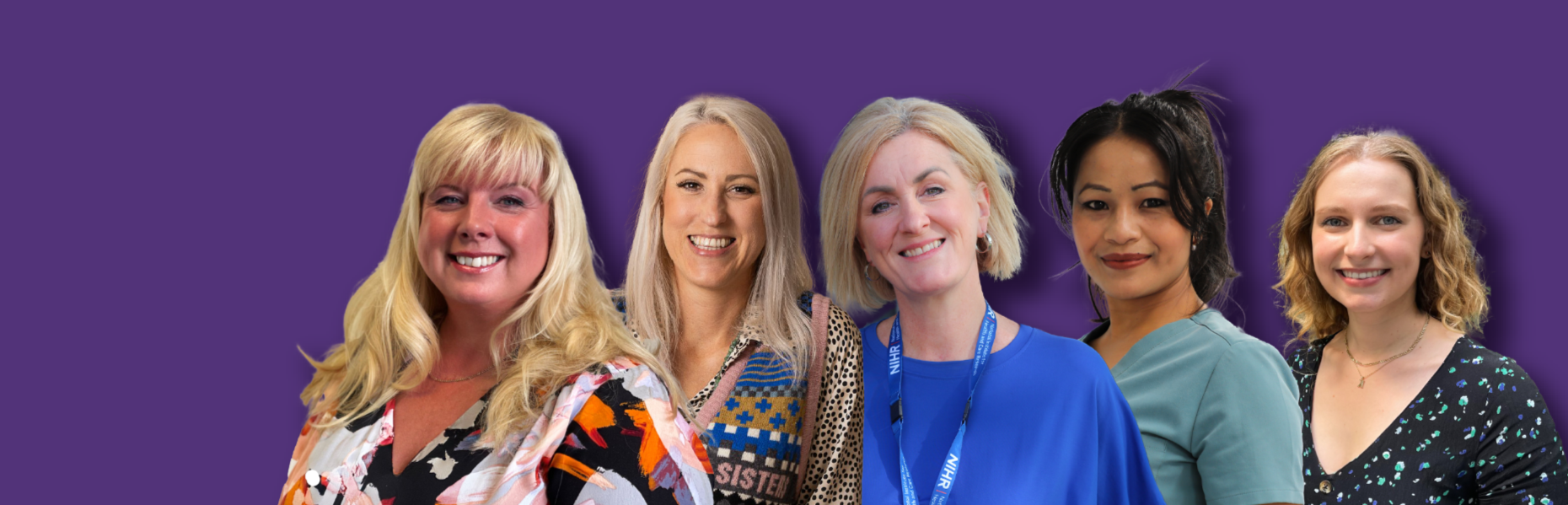
As we celebrate International Women’s Day (IWD) on Sunday 8 March 2026, we’re highlighting women whose leadership and commitment are shaping the future of research and innovation across the University Hospital of Liverpool Group.
This year marks the 115th anniversary of IWD and the global theme, Give to Gain, which reminds us that progress happens when we invest in one another.
When we are supported, valued and empowered, the benefits extend far beyond the individual. It enables teams to strengthen, organisations thrive and research and innovation to accelerate.

Among our inspiring leaders is Jules West, Director of Operations for Research & Innovation at UHLG, whose career reflects perseverance, collaboration and a passion for improving patient care.
Jules began her NHS journey in 1986, starting in the Community Dental Service as a Dental Nurse. She qualified as a Registered Dental Nurse in 1988.
In 1997, she moved into her first research role at the Liverpool Dental Hospital and the University of Liverpool, supporting a landmark longitudinal study exploring whether fluoride‑enriched school milk could reduce tooth decay in children.
Reflecting on that early experience, Jules said: “My first research role showed me how evidence can change outcomes at population level.
“It sparked the passion that shaped the rest of my career, a life‑changing decision.”
Following this, Jules went on to work in Vascular Surgery, becoming the EVAR Coordinator for a major European study comparing endovascular and open repairs for aortic aneurysms.
She later became the Operational Director of the Liverpool Cancer Trials Unit, before joining the then Liverpool University Hospitals as Associate Director of R&I.
Most recently, Jules has been appointed Director of Operations for Research & Innovation for UHL Group.
Balancing senior leadership with raising a family and completing both a degree in Business and Research and an MBA, Jules credits determination as the constant thread in her journey. Her proudest achievement, she says, is being able to support those around her.
Jules continued: “A leader is only as good as the team around them.
“I’ve worked with inspiring colleagues and I’m proud to use my experience to support those around me.”
Jules’ story is a powerful example of this year’s IWD message, Give to Gain, giving her time, expertise and encouragement to help others grow. In turn, the organisation gains stronger teams, deeper resilience and a shared commitment to excellence.
Driven by the belief that research transforms lives, Jules hopes her journey encourages others beginning their own path. Her advice is simple: “Anything is possible, keep striving for your goals.”

As Professor of Clinical Pharmacology and Therapeutics, Professor Lauren Walker’s journey began on the clinical pharmacology ward at the Royal Liverpool University Hospital, where her first role introduced her to a specialty she immediately connected with. The pace, the complexity and the team sparked an early fascination that never left.
Lauren said: “My earliest experience of working in a medical team was alongside clinical academics who split their time between NHS clinical work and university research.
“I loved the idea that you could study something in real depth and then apply it directly to patient care.”
Seeing how research shaped real‑world decisions inspired her to pursue an academic path. Today, her work focuses on people living with multiple long‑term conditions who take many medicines, known as multimorbidity and polypharmacy. With pharmacy colleagues, she recently helped establish a dedicated service to support safer, more informed prescribing for these patients.
She continued: “This service brings together everything I care about. It allows patients to make better decisions about their medicines, particularly later in life when priorities change.”
Lauren is driven by the impact she sees daily. Many older patients take 15 or more medicines, often with limited benefit.
Lauren said: “Stopping a medicine isn’t giving up.
“It simply means someone has had all the benefit they’re likely to get.”
To women looking towards a future in research, she offers a reminder: “Your perspective is needed more than you realise.”
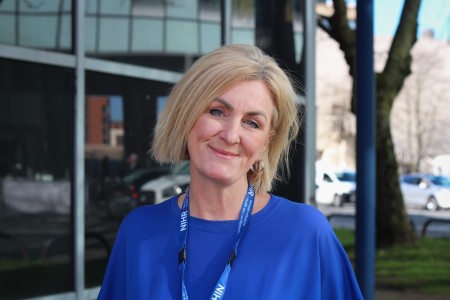
Sarah Kirkbride, Patient and Public Inclusion, Equality and Diversity Lead at the NIHR Cheshire and Merseyside CRDC, began her career in policing, spending 25 years working closely with communities and serving the public in Merseyside.
Sarah said: “I loved my role as a police officer, working my way up to Chief Inspector and later leading on Equality, Diversity and Inclusion for the force.
“My focus was on shaping culture and creating a workforce that truly reflected the communities we served.”
After retiring from policing in August 2024, Sarah joined Liverpool Women’s Hospital, driven by a continued desire to advocate for the public, particularly those whose voices are often unheard, bringing her EDI expertise into the NHS.
She soon found herself drawn to the impact of research on healthcare services and recognised that many underrepresented communities were not always included in shaping that work.
Sarah continued: “Research has huge potential to reduce health inequalities. I want to make sure no community in our region is left behind and that inclusion is embedded from the very start of the research process.”
One of Sarah’s proudest achievements is leading a project now nominated for an NHS Excellence Award. The initiative supported survivors of sexual violence and abuse to attend healthcare appointments, often a deeply distressing experience. Through the #CheckWithMeFirst campaign, discreet cards enabled survivors to signal their experiences and outline how staff could best support them.
Sarah said: “Whether through trauma‑informed practice or inclusive research strategies, I’m proud to be helping build systems that make the research space within healthcare more engaging and accessible for everyone.”
She is now turning her focus to the diverse communities of Liverpool, working to increase their involvement in clinical research.
Sarah added: “I’m motivated by the people I don’t see in the data.
“There are many seldom-heard voices, and I want to shine a light on them.”
To women considering a future in research, she offers this encouragement: “You don’t need a traditional academic path to belong here.
“Your lived experience, leadership and values all matter. Research needs voices like yours at every level.”

From her earliest days in medicine, Dr Fellisha Marwein was drawn to the quiet moments that revealed how care could be better. Now a Clinical Research Fellow on the NIHR Liverpool Clinical Research Facility, she is still inspired by the questions patients ask, the stories they share continuing to spark the curiosity that lead her into research.
Medical school gave her the scientific grounding, but it was the day-to-day reality of the wards that shaped her direction. The teamwork, the pace and the human connection showed her how closely learning and compassion sit at the heart of improvement.
Fellisha said: “Working on the wards showed me how much learning, teamwork and compassion shape care. That is where my interest in research and innovation truly grew.”
As a junior doctor, she saw how evidence guides practice and how research creates opportunities to question what has always been done.
She continued: “Research gives us the chance to ask better questions, challenge old habits and improve the patient journey.”
“It aligns with safe, effective and patient centred practice.”
Fellisha is proud of creating teaching spaces and small projects that help colleagues feel confident and supported, believing that simple ideas can spark meaningful change.
Fellisha continued: “Every story and every moment of trust reminds me why improvement matters.
“Innovation is not about perfection, it is about courage.
“Your ideas matter. Take the first step.”
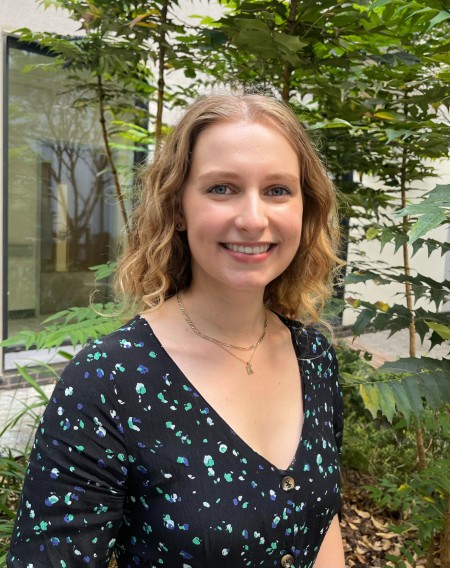
As the only woman in the UHL Group core innovation team, Katy Minko’s path into health innovation has been anything but traditional.
Graduating straight into the COVID‑19 pandemic, her early career spanned journalism, teaching and project management.
Katy said: “The launch into my career was a whirlwind, but one that ultimately pointed me toward the NHS.”
In 2021, she joined LUHFT as a therapy assistant, discovering a deep connection to patient care and the impact of frontline roles. She later moved into Strategy & Planning as a project coordinator, gaining insight into the complexity of delivering meaningful change across a large NHS trust.
When a vacancy opened in the Innovation Team, she found a role perfectly aligned with her skills, curiosity and ambition.
Katy continued: “My varied background has become a real strength. The communication, planning and strategic thinking I have developed, combined with hands‑on experience supporting patients, continue to shape my approach to innovation today.”
In her role as Innovation Officer, Katy supports clinicians, helps navigate governance and funding, and connects teams with emerging technologies, from AI diagnostics and VR therapies to wearable ECG devices and surgical innovations.
Her journey reflects the heart of Give to Gain, by championing new ideas, sharing knowledge and bringing people together. And in return, she gains the opportunity to drive change, elevate clinical teams and help shape the future of care.