

Melo is a digital healthcare platform designed, in collaboration with local digital company Decently. It aims to assist clinicians in capturing, tracking, and analysing behavioural data for patients living with dementia or other cognitive impairments. It helps manage complex behaviours and improves decision-making through data visualization and risk tracking.
Melo was introduced across LUHFT in 2024. Since then, 13 wards at Aintree, Broadgreen and the Royal have had the opportunity to be involved in the development of the system. This led to the creation of ABC+ on the Melo platform, a replacement for the traditional paper ABC behavioural charts that were often written retrospectively or illegible. ABC+ looks at the holistic care of the patient focusing on positive and negative behaviours and the patients sleep.
ABC+ has been live since 17 February 2026 and is still being piloted by the 13 wards that inputted into its development. As of April 2026, over 38,000 assessments have been completed on the platform, leading to positive behaviours and increased support for discharge planning.
Staff login to Melo and conduct digital behavioural assessments (ABS & ABC).
Data and insights available to all users in real-time via graphs, analytics and dashboards.
- Improved data quality and audit
- Reduced time to produce data required for effective discharge planning
- Removal of paper-based forms from wards
- Improved visibility of patient behaviour across teams.
Jim's Melo story
Jim was well known to STAR workers from his
previous three hospital admissions that occurred since 2024, one of which had no saved behaviour chart. Jim built a good relationship with our STAR team after being referred due to low mood and elements of behavioural psychological symptoms of dementia.
A referral was created to support Jim with cognitive stimulation and de-escalation of behaviours. Jim was receiving enhanced therapeutic observations and care (ETOC) on a ward prior to referral.
Prior to STAR involvement, Jim was receiving IM PRN medication (both Halperidol and Lorazepam). He also required security intervention with seven calls made in his first six days of admission to hospital.
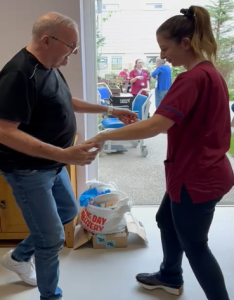
Thanks to completing the Agitated Behaviour Scale (ABS), staff were able to identify areas to help improve Jim's mood and worked with STAR colleagues to organise regular weekly activity sessions, such as reminiscing, arts and crafts, music, breakfast club, talking therapy and dancing.
Jim has since been discharged to a new care home and has had no re-admission to hospital.
Michael's Melo story
Michael was admitted to Aintree ED on 1 July 2025 and was then transferred to Ward 34 where he was the first patient with a learning disability to be recorded on the Melo platform.
As Michael also had a diagnosis of dementia, his accomodation prior to admission became unsuitable to discharge to. There were also no suitable behaviour charts on file to support with discharge planning.
The Learning Disability Team reviewed his presentation as the Community Care Team were worried about a change in needs and support that would be required post-discharge.
Michael was in hospital for a total 24 days and at times was under ETOC.
Thanks for staff on Ward 34 introducing Michael's behavioural notes to Melo, the Learning Disability Team were able to access notes remotely and support with a capacity assessment around Michael's discharge.
Michael was deemed medically fit earlier than discharge was allowed. Lessons learnt highlighted that the main barrier was correct placement and delayed MCA, not behaviour itself. Melo may not have directly sped up discharge in this instance, but it did improve team understanding and handover quality.
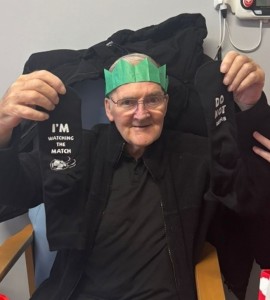
Michael's Sister-In-Law, Ann Dorman, said: “He looks the happiest we have seen him in a while. I know there was some apprehension at first about Michael moving into a new care home, but it was the best decision. The discharge also went so smoothly.”

