
A Liverpool woman who signed up to take part in medical research as a healthy volunteer discovered she had an underlying heart condition after routine screening tests at the NIHR Clinical Research Facility: Liverpool (CRF). This was part of a project to improve how clinical trial information is explained to future patients and volunteers.
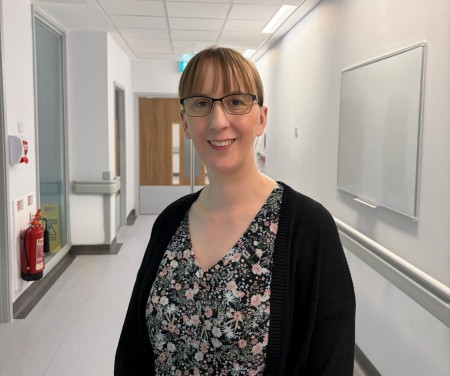
The work was led by Kate Dodd, Recruitment and Engagement Manager at the NIHR Liverpool CRF, based at the Royal Liverpool University Hospital, alongside academic supervisor Professor Lauren Walker, Deputy Director of the NIHR CRF: Liverpool.
Sylvie, a 26-year-old from Liverpool, volunteered to take part in a healthy volunteer study at the NIHR Liverpool CRF. As part of the screening process, she underwent routine health checks including blood tests, physical examinations and an ECG, which checks the heart’s rhythm.
Although Sylvie felt completely healthy, the ECG highlighted signs of Wolff-Parkinson-White syndrome, a condition that affects the electrical signals in the heart.
Sylvie said: “I was a bit nervous initially as all I knew was that my ECG wasn’t normal and that’s quite scary to hear. I was also disappointed that I wasn’t able to take part in the study but at the same time extremely grateful to the team for catching it and putting my health first.”
Following the appointment, Sylvie was quickly referred for further hospital tests to confirm the diagnosis. She added: “The screening process is a bit like an MOT for participants and a great way to get a health check-up, even if you seem totally healthy.”
Findings from the study:
The experience reflects wider findings from a review carried out by researchers, which looked at screening data from 1,158 people attending early-phase clinical trial appointments over an eight-year period.
The review found that important undiagnosed health concerns were identified in around 1 in 17 healthy volunteers and 1 in 25 patients. In some cases, participants were advised to seek further medical care or treatment for conditions they did not know they had.
The findings prompted the NIHR CRF: Liverpool team to look at whether this information should be explained more clearly to people before they decide to take part in research studies.
Kate undertook a research project through the University of Liverpool which focused on improving how the potential benefits of participation are described in Participant Information Sheets for early-phase clinical trials. Working alongside patients and members of the public, she co-developed revised wording for this section of the information sheets, making it clearer, more accessible and easier for potential participants to understand.
Participant Information Sheets explain what taking part in a study involves, including any risks and possible benefits. However, feedback from members of the public found that the original wording was often too medical and difficult to follow.
Kate said: “We wanted people considering taking part in research to have information that was clear, honest and easy to understand. This work showed that while studies are not designed to directly benefit participants medically, the screening process can sometimes identify unrelated health conditions people may not know they have.
“By working closely with patients and members of the public, we were able to develop wording that is much clearer and more reassuring for future participants.”
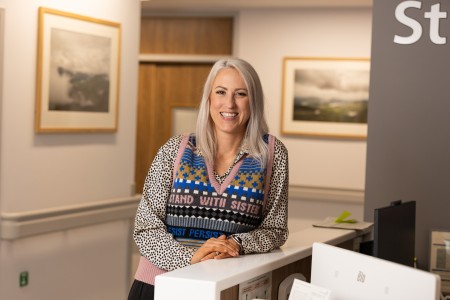
Public feedback led to medical jargon and complex statistics being replaced with simpler language and more straightforward explanations.
Professor Lauren Walker, Deputy Director of the NIHR CRF: Liverpool, said: “This work shows how important it is to involve patients and the public when developing research information. Clear communication helps people make informed decisions about taking part in research and ensures information is accessible to everyone.”
The project highlights the important role patients and volunteers play not only in advancing research, but also in helping improve the experience for future participants across the NHS.
To read the full paper, click here.