
An MRI (Magnetic Resonance Imaging) scan is a safe, non-invasive imaging test that helps doctors obtain detailed images of the inside of your body. It is commonly used to examine organs, soft tissues, joints, and bones.
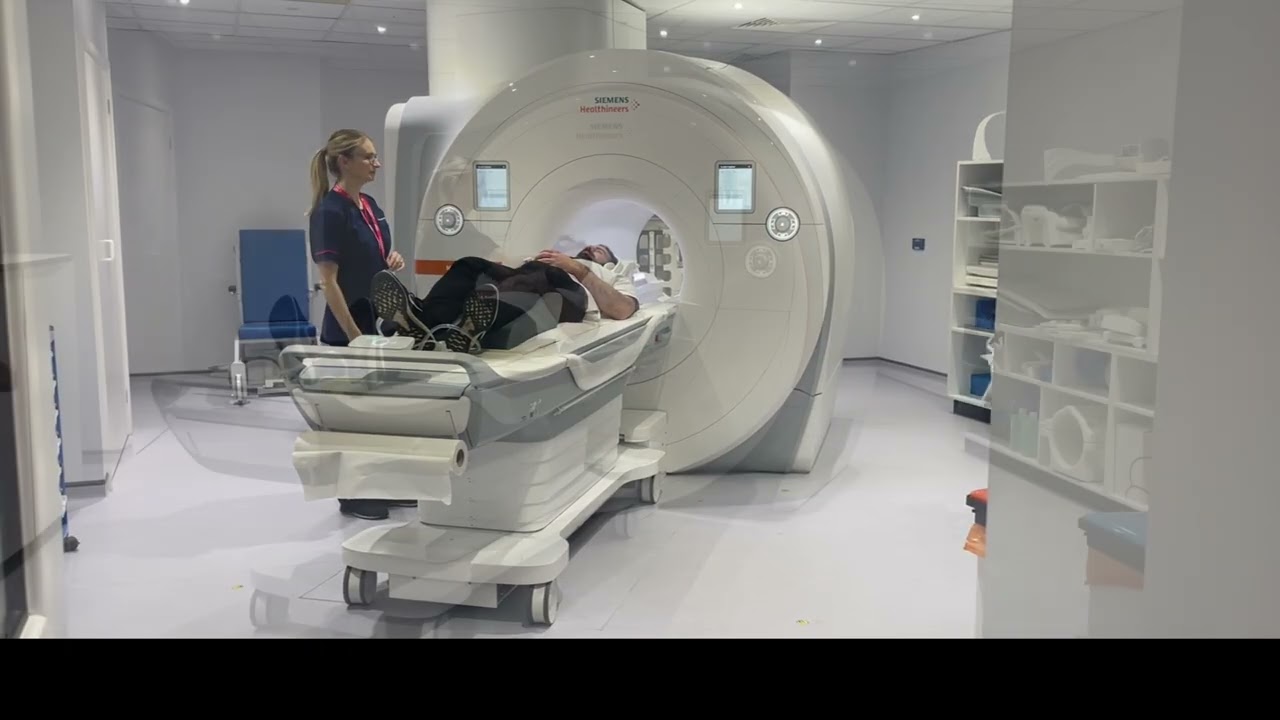
During the scan, you will lie comfortably on a table that moves into a large, tunnel-shaped scanner. The MRI machine uses strong magnetic fields and radio waves to produce high-quality images, without the use of X-rays.
Most MRI scans take between 30 and 60 minutes, depending on the area being examined. You will be able to communicate with the radiographer throughout the procedure, and support will be available at all times.
Use of contrast dye
In some cases, a contrast dye may be used to to enhance the images. If required, the contrast is injected through a small cannula (thin tube) inserted into a vein, usually in your arm. The radiographer will explain this process to you before the scan. The contrast helps provide more detailed views of certain areas of your body.
Safety information
Your safety is our priority. Before your MRI, you will be asked a few important safety questions to ensure the procedure is suitable for you. These may include whether you:
- Have any metal implants, pacemakers, intracranial vascular clips or other medical devices
- Are pregnant or breastfeeding
- Have any metal fragments in your body from previous injuries or surgery.
Please follow any instructions provided by your doctor or the MRI team to help ensure the best possible results. If you have any concerns or think any of the above may apply to you, we encourage you to contact us before your appointment.
What to expect
The video below explains what to expect when attending for an MRI scan at the Royal Liverpool University Hospital, helping you feel prepared and informed ahead of your visit.
More information
You can be referred for a MR scan by your GP, hospital clinician or specialist practitioner nurse within their scope of practice.
If your scan is of an urgent nature you should hear about your MR scan within two weeks of the Radiology Department receiving it. If your scan is of a non-urgent nature, your scan appointment can be up to six weeks after we have received your request.
Once the scan is complete a radiologist will report your scan. The results will then be available to your referrer, who will contact you to arrange for you to receive them.
-
Aintree University Hospital
Address: Aintree University Hospital
Lower Lane
Fazakerley
Liverpool
L9 7ALFor maps and other information visit our Getting Here page for Aintree University Hospital
-
Royal Liverpool University Hospital
Address: Royal Liverpool University Hospital
Prescot Street
Liverpool
Merseyside
L7 8XPFor maps and other information visit our Getting Here page for Royal Liverpool University Hospital
-
Liverpool Women’s University Hospital
Address: Liverpool Women’s University Hospital
Crown Street
Liverpool
L8 7SS